
ADF-SERIALS
Australian, New Zealand & Papua New Guinea Military Aircraft Serials & History
Aircraft of Central Flying School 1909 - 1918

| The
Central Flying School (CFS) was formed at Point
Cook, Victoria, on 7 March 1913. It is possible
to trace the beginnings of CFS back to 1909, when
the Department of Defence began to recognise the
potential of developing aviation as an part of
the permanent military establishment of the
Australian armed forces.
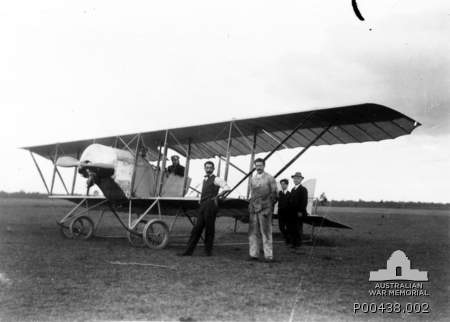
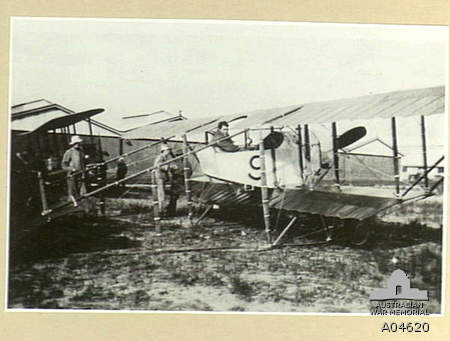
On 30 December 1911 the Commonwealth Gazette called for applications from "expert mechanists and aviators desirous of being appointed to the Defence Department". On 26 September Australian Army Order No 132/1912 was issued to establish an aviation flight consisting of four officers, seven warrant officers and sergeants, thirty-two mechanics, and four aircraft. The Government ordered two B.E.2 two-seater biplanes and two Deperdussin single-seater monoplanes for the new aviation flight. The Defence Department were advised that these aircraft were not suitable for preliminary flying training, so a Bristol Boxkite was added to the aircraft establishment on 6 December 1912. Point Cook was chosen as the site for the CFS as it offered both land and sea access, was close to Army Headquarters in Melbourne, and the flat terrain was ideal for flying training. The Government purchased 734 acres (2.97 km2) at the site for a total of £6,040/2/3. The newly appointed Australian Aviation Instructional staff were tasked with establishing the Central Flying School at Point Cook. By February 1914 tents had been organised to accommodate personnel and canvas hangars were being designed to house the aircraft. Nine locally enlisted mechanics joined the staff in late February. On 1 March 1914 Lieutenant Harrison made the first Military flight in Australia in a Bristol Boxkite registered as CFS 3. From March to August 1914 the school's five aircraft were test flown at Point Cook. During July 1914 applications were invited from unmarried Citizen Force officers between 20 and 25 to train as aircraft pilots at Central Flying School. By the time war began in Europe on 4 August 1914 Central Flying School had already programmed the first flying course for 17 August 1914 and a further eleven courses training about 156 pilots for the Australian Flying Corps (AFC) were held at CFS between 1914–1918. At the end of the Great War the Australian Flying Corps was disbanded and flying training in Australia was suspended. The CFS continues it's role in the establishment of the RAAF and as such is the oldest military aviation unit in Australia. Point Cook (as part of RAAF Williams) is now understood to be the world's longest continuously operated military airfield. |
CFS1-CFS20 |
| CFS.Serial | Type/Model | RFC/RNAS Serial | C/N | Aircraft History |
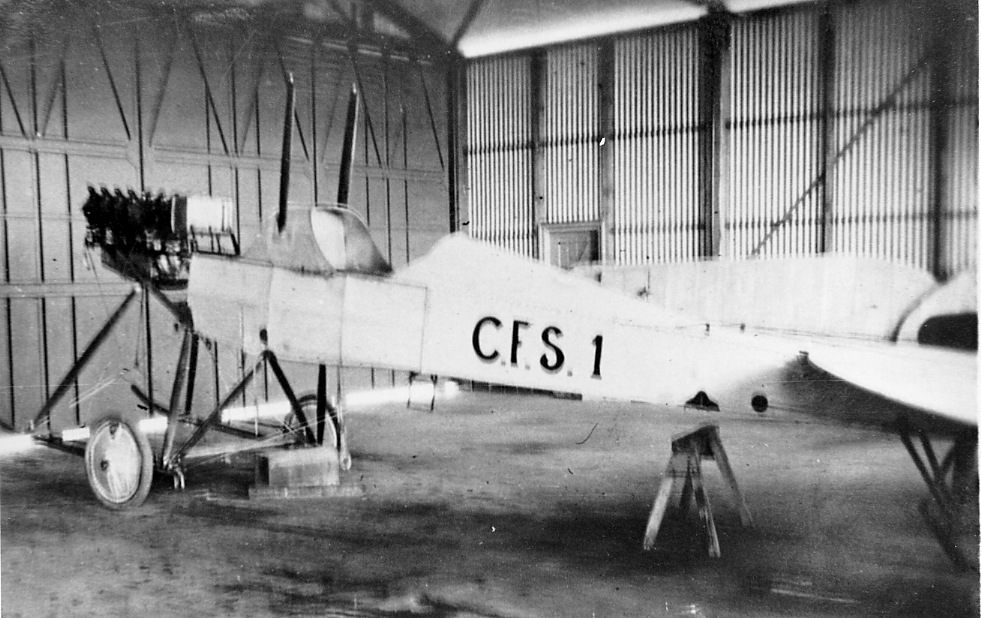
| CFS1 | Royal Aircraft Factory B.E.2a | ? | ? | Ordered
3 July 1912 (£850
for airframe and £250
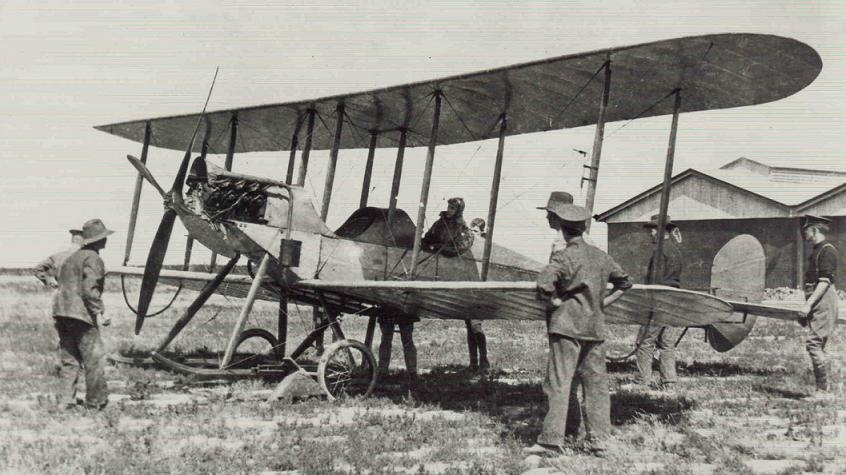
for spares), Fitted with a 70 Hp Renault engine, Test flown in the UK October to November 1913, Shipped to Australian on SS Hawkes Bay, 03/12/1914 Arrived in Australia, 01/05/1914 First flight at CFS Point Cook, ??/02/1918 Crashed and Written Off, 1918 Struck off charge and disposed. Two mainplanes from either CFS1 or CFS2 are on display at the Australian National Avation Museum at Moorabbin, Victoria. |
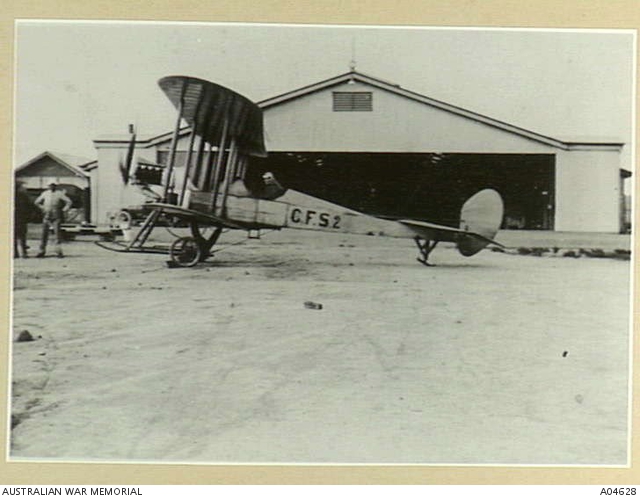
| CFS2 | Royal Aircraft Factory B.E.2a | ? | ? | Ordered
3 July 1912 (£850
for airframe and £250
for spares), Fitted with a 70 Hp Renault engine, Test flown in the UK October to November 1913, Shipped to Australian on SS Hawkes Bay, 03/12/1914 Arrived in Australia, 12/02/1915 Forced landing when engine seized (Captain Petre), 09/10/1915 Forced landing at Broadmeadows, Vic, 1918 Struck off charge and disposed. Two mainplanes from either CFS1 or CFS2 are on display at the Australian National Avation Museum at Moorabbin, Victoria. |
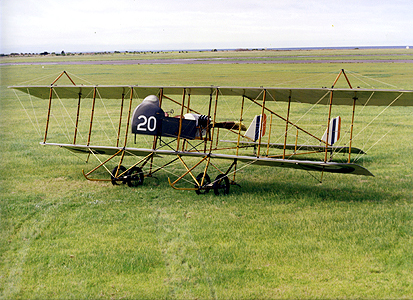
| CFS3 | Bristol Boxkite | ? | 133 | 06/12/1912 Ordered, 02/02/1913 Completed by the British & Colonial Aeroplane Co., 06/02/1913 Packed for transfer to docks, 13/03/1913 Arrived in Sydney on SS Norseman, Stored in Sydney, ??/07/1913 Transferred to the Ordnance Store at Victora Baracks, Melbourne, ??/02/1914 To CFS Point Cook, 01/03/1914 First flight and first official Australian military flight at Point Cook, 09/03/1914 Damaged when a dog ran into he propellor (Lt.Harrison), 11/09/1914 Damaged on landing and hitting a hangar (Capt.White), 14/10/1914 Damaged on landing (Capt.White), 28/07/1915 Damaged on landing (Lt.Hall), 21/08/1915 Damaged in forced landing (Lt.Manwell), Late 1917 Struck off charge. Note: A quote for an additional Boxkite was provided by Bristol on 08/04/1914 at a cost of £725 fitted with an 80Hp Gnome engine. On 17/06/1914 one was ordered but was not fulfilled. on 14/06/1915, Bristol advised ht the "Bristol Biplane" was no longer available. This lead to the construction of CFS8 by the CFS at the later the order of two Grahame-White Boxkites (CFS11 & CFS12). |
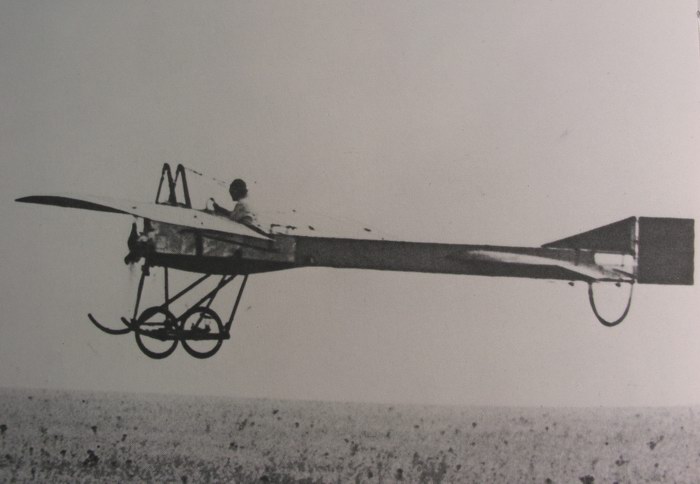
| CFS4 | Deperdussin Type A | ? | ? | 03/07/1912 Purchased for £480
plus £150
for spares and fitted with a 35Hp Anzani Y engine, January 1913 Built by the British Deperdusin works at Highgate, London. 26/02/1913 Test flown from Farnborough, 15/03/1913 Accepted by Australian Government, 28/05/1913 Arrived in Sydney aboard SS Demosthenes, Stored at the Darling Island Ordnance Stores, 29/07/1913 Moved to Melbourne and Stored at Victoria Barracks, ??/02/1914 To CFS Point Cook, 02/03/1913 First flight at Point Cook, 09/03/1914 Crashed with Lt. Henry Petre at the controls after an engine failure, side slipped into the ground causing considerable damage, The damage was repairable but considered dangerous so the aircraft was struck off charge. |
| CFS4
later CFS10 |
Bristol Scout D | 8976 | 1149 | See CFS10 below |
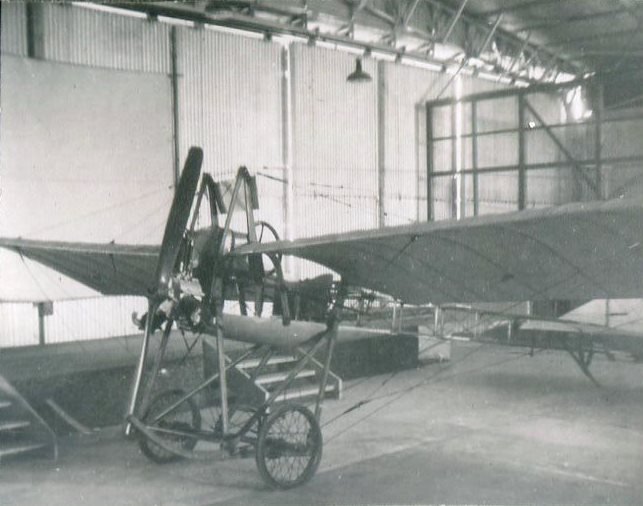
| CFS5 | Deperdussin Type A | ? | ? | 03/07/1912 Purchased for £480
plus £150
for spares and fitted with a 35Hp Anzani Y engine, January 1913 Built by the British Deperdusin works at Highgate, London. 22/02/1913 The aircraft is not though to have flown as it was acquired as a non-flyer and referred to as a "rolling taxi" for ground handling only, however it made the first of several short hops on this date during trials, 05/03/1913 Accepted by Australian Government, 28/05/1913 Arrived in Sydney aboard SS Demosthenes, Stored at the Darling Island Ordnance Stores, 29/07/1913 Moved to Melbourne and Stored at Victoria Barracks, ??/02/1914 To CFS Point Cook, 16/09/1914 Lt.E.Harrison made it's only flight at Point Cook on this date when it was flown to a height of 20 feet, Subsequently used for taxy training, Disposed 1918. 1920 To Australian War Museum (later Australian War Memorial), Restored to static display at AWM, Mitchell, Canberra. |
| CFS6 | Bleriot XI | ? | ? | Fitted with a 50 Hp Gnome rotary engine, 11/03/1915 Test flown by Captain H.A.Petre, 19/09/1915 Donated by W. Reynolds & Son of North Melbourne, Reportedly only flown three times in CFS Service. Mainly used as a ground instructional airframe for engine starting and ground handling, 1917 Struck off charge. |
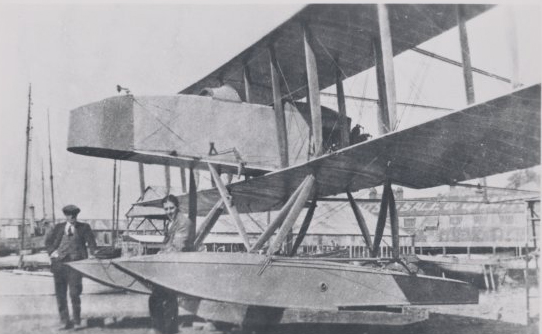
| CFS7 | Maurice Farman Hydro-Aeroplane | ? | ? | ??/04/1914 Imported by Mr Lebbeus Hordern of Anthony Hordern &
Sons, Sydney having been purchased
for £1600 in May 1914,
Fitted with a 70 Hp Renault engine, It was the first floatplane in Australia. 03/09/1914 Presented to the Government by Mr Lebbeus Hordern, Sydney. 03/09/1914 Accepted by Australian Government, 29/11/1914 Sent to Rabaul, New Guinea with a B.E.2a aboard HMAS Una, 21/01/1915 Returned to Australia, 28/06/1917 to Modified by the CFS as a landplane, 30/06/1917 recorded as "Maurice Farman biplane converted" with dual control, having been converted at a cost of £40/14/-. 20/07/1916 The landplane was re-equipped with an Australian license-built Renault engine, constructed by Tarrant Motors in Melbourne, The landplane, still numbered CFS 7, was used only occasionally as a reserve for the Bristol Boxkites and, later, the Grahame-White Boxkites, The last recorded mention of the aircraft was on 30/06/1917 when it was officially listed as one 'Maurice Farman Biplane (converted) - for instructional use' along with MF7 Longhorn CFS15 and 2 Grahame-White Boxkites. |
| CFS8 | (Bristol) Boxkite | ? | ? | Constructed
by CFS 1915, 10/08/1915 Test flown by Lt. Harrison and accepted into service, 11/10/1915 Damaged on landing when it collided with a motor car (Lt.W.Sheldon), 03/10/1916 Crashed due to engine failure at Point Cook (Lt.Mowle), 06/12/1916 Aproved to convert to components. Note from SQNLDR Steve
Campbell-Wright: |
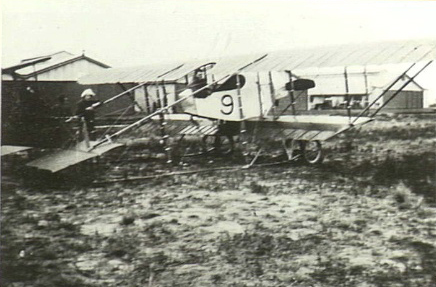
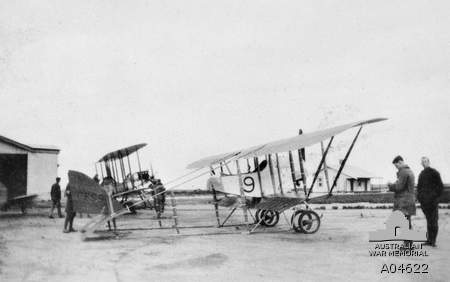
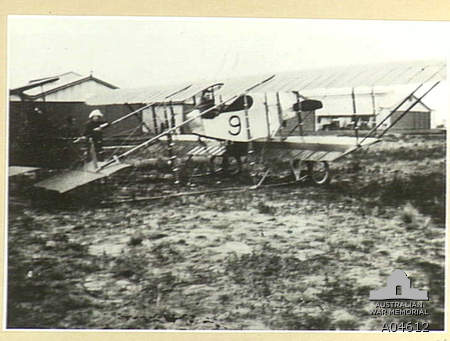
| CFS9 | Caudron G.III | ? | ? | 15/09/1914 Imported to Sydney at a cost of £1600, ??/12/1914 Offered to the Commonwealth Government for £1500 by Mr. Walter McConochie of Sydney, ??/01/1915 Capt Henry Petre conducted five evaluation flights during January 1915 assessing the aircraft's performance as poor and recommending a purchase price of £900, 22/01/1916 Purchase from T.A.Field & R.C.C.Marduel of Sydney with a 80Hp Gnome rotary engine, 25/01/1916 Accepted, 01/08/1916 Lasted logged flight by Lt R.Galloway, Presumably used for ground training as the engine was recorded as unreliable, Late 1917 Struck of charge. |
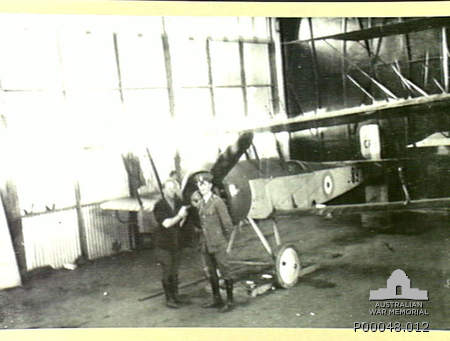
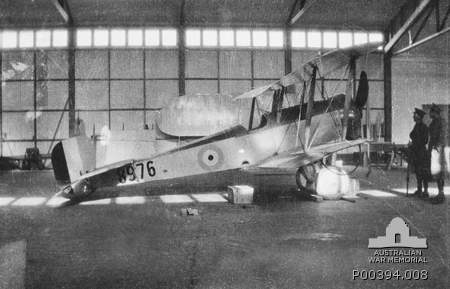
| CFS10 | Bristol Scout D | 8976 | 1149 | 17/06/1916 CFS advised that a Bristol Scout
could be acquired complete with bomb sights, bombs, Lewis guns,
aerial cameras and accessories for £1000. 28/06/1916 Ordered at a cost of with 100Hp Gnome Monosoupape rotary engine, Built by Bristol, Filton. and alotted RNAS serial 8976 and Bristol constructor's number 1149, 29/07/1916 Shipped to Australia on SS Bakara, 28/09/1916 Arrived at CFS, Point Cook, Renumbered CFS4, This aircraft was considered advanced and therefore unsuitable for the elementary training task at the CFS, It was instead used as a hack aircraft by the senior staff of the CFS. 18/10/1916 First flown at Point Cook by Capt.E.Harrison, 30/10/1917 Damaged on landing, Wagga, NSW. Lt.R.F.Galloway, 08/01/1920 To A flight, CFS, AAC, 31/03/1921 To 1 FTS AAF as 8976, ??/01/1923 Damaged (Flt Lt De La Rue), 1924 Known as "CO's Ship" at Point Cook, 16/07/1926 1 AD Board of Survey recommended that the aircraft be handed over to the Footscray Technical School, 18/08/1926 Struck off Charge, 08/10/1926 To Footscray Technical School as an instructional airframe. |
| CFS11 | Grahame-White Boxkite XV | 8752 | ? | 11/01/1916 Ordered by Australian Government, total cost for
CFS11 & CFS12 was £2920, Built by Grahame-White Aviation Co. at Hendon as Admiralty Type 1600 or Boxkite XV, with 60 Hp Le Rhone engine, 24/03/1916 Shiped to Australia on SS Berrima, 29/04/1916 Delivered to CFS, Point Cook, July 1916 Flight trials at CFS, Point Cook before entering service, ??/01/1918 Struck off Charge. |
| CFS12 | Grahame-White Boxkite XV | 8753 | ? | 11/01/1916 Ordered by Australian Government, total cost for
CFS11 & CFS12 was £2920, Built by Grahame-White Aviation Co. at Hendon as Admiralty Type 1600 or Boxkite XV, with 60 Hp Le Rhone engine, 24/03/1916 Shiped to Australia on SS Berrima, 29/04/1916 Delivered to CFS, Point Cook, July 1916 Flight trials at CFS, Point Cook before entering service, 06/05/1917 Crashed when aircraft stalled (Lt.J.P.Deppe), 12/05/1917 Repaired and returned to service by this date, ??/01/1918 Struck off Charge. |
| CFS13 | N/A | N/A | N/A | Not Allotted |
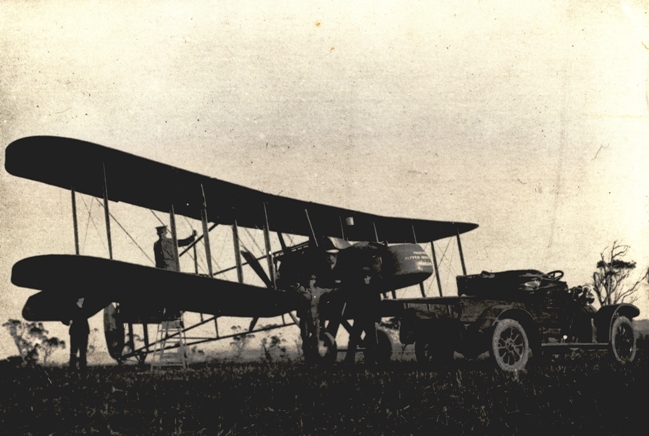
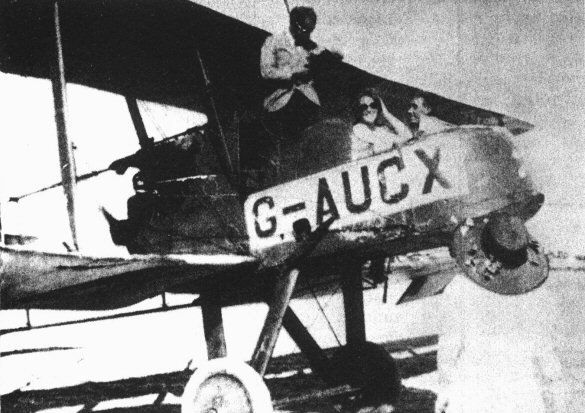
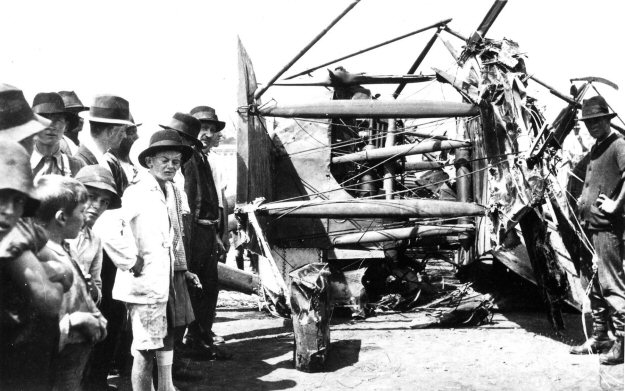
| CFS14 | Royal Aircraft Factory F.E.2b | A778 | ? | Built by G. & J. Weir, Cathcart, UK, with a 120 Hp Beardmore
engine, 11/11/1916 Allotted to Australia by the British Government after £2250 had been donated by Mr. A.M.Simpson of Adelaide for the purchase of a "Battleplane", 14/03/17 Received at CFS and in service with CFS to 1919, April-May 1918 On detachment to Yarram, Vic, 22/08/1919 Offer of purchase by Lt H.C.Miller rejected, 1920 Transferred to AAC, still with CFS, 02/06/1920 Offer of purchase at £425 by Capt. J.W.Fullerton, June to July 1920 Retained for Exhibition of Aircraft at Melbourne, 10/08/1920 Decision to sell at recommended price of £2346, 13/10/1920 Test flown by Capt Cole after re-rigging, 15/10/1920 Flown with Mr.Cowper as a passenger "to show off goods to probable purchaser", Sold to Aviation Ltd. of Glenroy, VIC for £1350 including spares, 03/11/1920 Struck off strength, December 1920 Operated in South Australia, 28/06/1921 Registered G-AUCX, ??/07/1921 Sold to Raymond.J.Parer, 07/02/1922 Crashed at Boulder, WA. One report indicates that the aircraft clipped telephone wires after take off from the Boulder racecourse. Other reports indicate that the wheels struck the tramcar wires along Burt Street. Both Ray Parer and and his cousin Mark Parer were injured and the aircraft was not rebuilt. |
| CFS15 | Maurice Farman M.F.7 Longhorn | ? | ? | Shipped from UK aboard SS Medic, departing
30/08/16 Arrived Point Cook 19/11/16 Test flown 22/11/16 On 30/06/17 listed as Instructional Aircraft along with the MF Seaplane (CFS7) and two Graheme-White Boxkites Presumed Struck off charge in late 1918 an sold in 1919. |
| CFS16 | Maurice Farman M.F.11 Shorthorn | A942 | ? | Built by the Aircraft Manufacturing Co. Ltd., Hendon, with
80 Hp Renault engine, 08/10/1916 Allotted by British Government, 22/11/1916 Test flown at Point Cok by Capt.E.Harrison, 01/05/1917 Damaged, 09/05/1917 Repaired by this date, ??/03/1919 Sold to Robert G. Carey of Port Melbourne, with the intention to use them for advertising, joyriding and barnstorming, 11/04/1919 Delivered to Robert G. Carey of Port Melbourne, 1920 Damaged or destroyed in a gale. * |
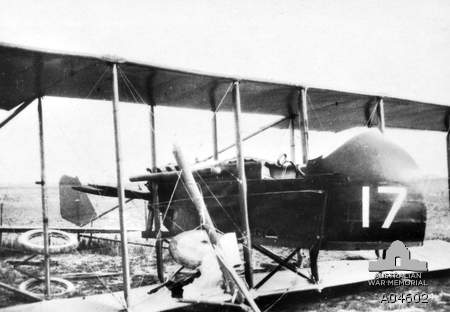
| CFS17 | Maurice Farman M.F.11 Shorthorn | A6863 | ? | Built by the Aircraft Manufacturing Co. Ltd., Hendon, Ordered February 1917. 20/04/1917 Allotted to Australia by the British Government, 20/09/1917 Received at CFS, Point Cook, 16/11/1917 Crashed at Point Cook - Cdt Reginal.K.Duckworth Killed, Accidentally side-slipped at 1000 feet and failed to regain control, Repaired/Rebuilt and returned to service, In service between February 1918 to at least August 1918, Sold to Robert G. Carey of Port Melbourne, with the intention to use them for advertising, joyriding and barnstorming, 11/04/1919 Delivered to Robert G. Carey of Port Melbourne, 1920 Damaged or destroyed in a gale. * |
| CFS18 | Maurice Farman M.F.11 Shorthorn | A6867 | ? | Built by the Aircraft Manufacturing Co. Ltd., Hendon, Ordered February 1917. 20/04/1917 Allotted to Australia by the British Government, 20/09/1917 Received at CFS, Point Cook, In service between February 1918 to at least August 1918, Struck off charge, May 1919 Sold to R.Graham.Carey at Port Melbourne, 1920 Damaged or destroyed in a gale. * |
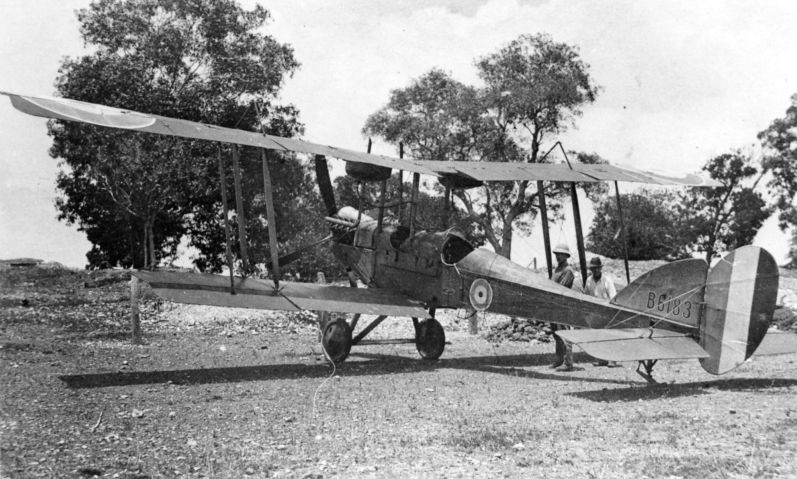
| CFS18(?) | Royal Aircraft Factory B.E.2e | B6183 | ? | Built by British Caudron
Co., at Alloa, Clackmannanshire, Scotland with a 90 Hp RAF
engine, 08/05/1918 Allotted to Australia, 02/06/1918 Dispatched from 6 Stores Depot, Ascot, UK, ??/09/1918 Received at CFS, Point Cook, 04/02/1919 Erected at Point Cook, 20/08/1919 Test flown by Mr. W.Stutt, 04/09/1919 Peace Loan, 05/09/1919 Crashed at Traralgon, Vic. (Capt.C.Matheson), 10/09/1919 To ARS, 30/10/1919 Repaired and test flown, 16/11/1919 Commenced first transcontinental flight from Point Cook to Darwin, (Capt.H.N.Wrigley & Sgt.A.W.Murphy), The flight was to survey the route for the England-Australia Air Race in 1919, won by Ross & Keith Smith in Vickers Vimy G-EAOU, 12/12/1919 Arrived Darwin, 10/01/1920 Arrived in Sydney on SS Mataram from Darwin, 16/01/1920 To ARS Point Cook, 11/02/1920 Test flown at Point Cook by Capt.Cole after rebuilding, 17/03/1920 Last flown - total of 78 hours flying time, 05/08/1920 Allotted by AAC to Australian War Museum, ??/06/1922 Still on strength at Point Cook. Note: This aircraft is often quoted as CFS18 but there is no evidence that this was in fact the case. |
| CFS19 | Maurice Farman M.F.11 Shorthorn | B2011 | 1505 | 17/04/1917 CFS recommended the purchase of
two Farmans due to the unavailability of D.H.6's, 26/05/1917 Order approved, 29/05/1917 Order placed at a cost of £1500 per airframe, Built by the Aircraft Manufacturing Co. Ltd., Hendon, 31/05/1917 Allotted to Australia by the British Government, 31/07/1917 Shipped on SS Palermo, ??/10/1917 Received at CFS, Point Cook, ??/08/1918 In use by the CFS to at least August 1918, 1919. Sold to Robert G. Carey of Port Melbourne, with the intention to use them for advertising, joyriding and barnstorming, 11/04/1919 Delivered to Robert G. Carey of Port Melbourne, 1920 Damaged or destroyed in a gale. * 28/06/1921 Registered G-AUBC, Sold to E. Prosser of Tamworth, New South Wales, where it ??/02/1926 Crashed in February 1926, the remains were stored. 08/05/1954 Rebuilt and registered VH-UBC, unfortunately it crashed on its second maiden flight. ??/??1956 Rebuilt again, it was flown in 1956, ??/??1956 Sold to the Tallmantz Aviation Aircraft Collection in the USA, reportedly registered as N96452. Subsequently it was sold to two aviation museums before it was acquired by the Canadian Aviation and Space Museum in 1981 at auction. It still wears the Australian registration VH-UBC on the top of the starboard upper wing. |
| CFS20 | Maurice Farman MF.11 Shorthorn | B2012 | 1506 | 17/04/1917 CFS recommended the purchase of
two Farmans due to the unavailability of D.H.6's, 26/05/1917 Order approved, 29/05/1917 Order placed at a cost of £1500 per airframe, Built by the Aircraft Manufacturing Co. Ltd., Hendon, 31/05/1917 Allotted to Australia by the British Government, ??/10/1917 Received at CFS, Point Cook, ??/08/1918 in use by the CFS to at least August 1918, 1919. Sold to Robert G. Carey of Port Melbourne, with the intention to use them for advertising, joyriding and barnstorming, 11/04/1919 Delivered to Robert G. Carey of Port Melbourne, 1920 Damaged or destroyed in a gale. * 28/06/1921 Believed to have bcome G-AUCW, To VH-UCW and in operation until 1933 and then stored, 1981 Donated to the RAAF Museum, Point Cook, 1993 The aircraft at the RAAF Museum, Point Cook displayed as CFS20 is rebuild from the remains of several of the MF.11's listed here. * Note: One of the Farmans (either CFS16 or CFS 17) was c/n 1326 was also sold to RG Carey in 1919 and joined the Australian register on June 28, 1921 as G-AUCW to R.G.Carey (Melbourne Air Services) of Port Melbourne. This registration lapsed on 31/12/1928 and it was restored to the register as VH-UCW on 22/11/1930. Carey flew the aircraft till it was withdrawn from use on March 1, 1933 and subsequently stored. Nearly 50 years later the aircraft was in a deplorable state, and the remains were donated to the RAAF Museum in 1981. Thirty percent of the aircraft was reused to produce the aircraft that is now on display at the RAAF Museum, marked as CFS20 |
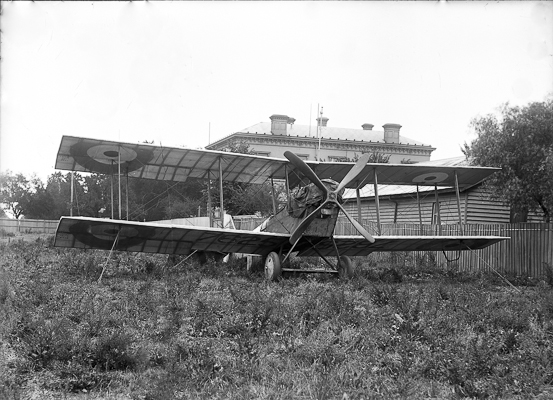
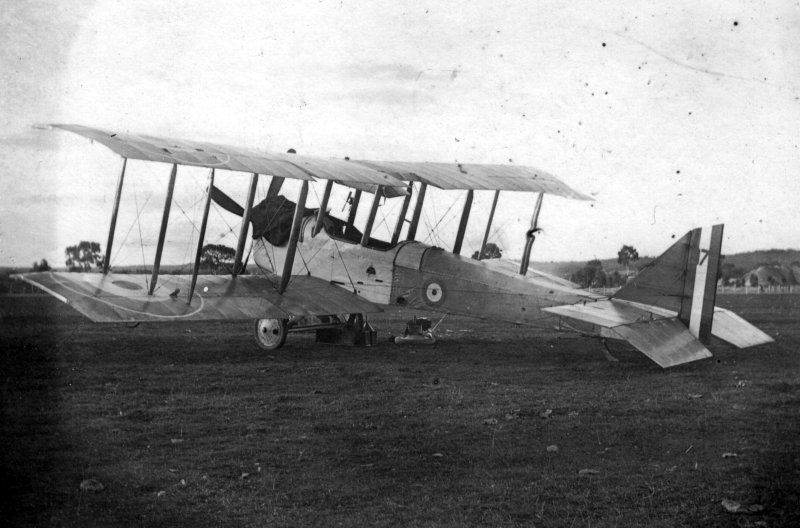
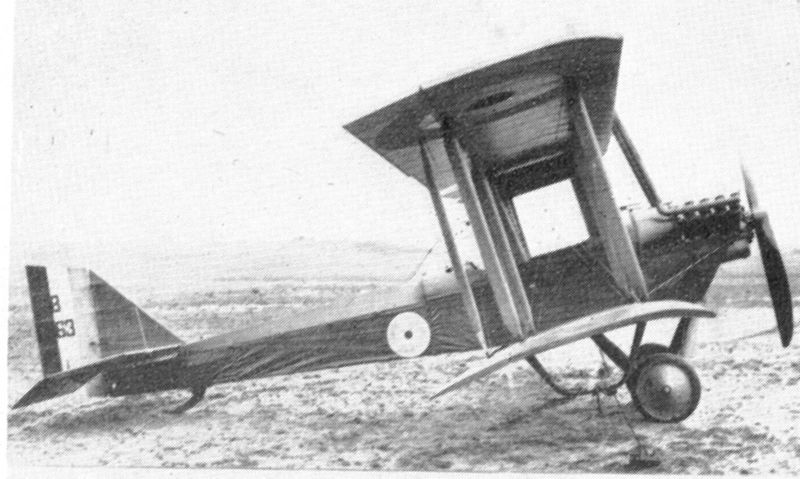
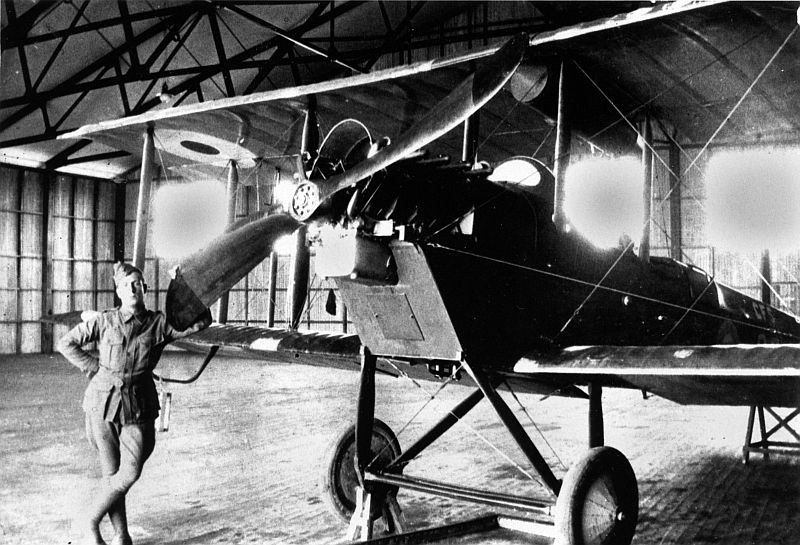
CFS21-CFS28 Airco D.H.6 Eight DH-6's were ordered for the CFS on 20 March 1918 and allotted the serials CFS21 to CFS28. Two were shipped SS Gilgai on 29/05/1918, two were lost in transit on SS Barunga which was topedoed by a German submarine at 4:30pm on 15 July 1918 in English waters, two were shipped SS Calulu 27/06/1918 and a further two on SS Carpentaria 05/08/1918. Two replacements were ordered on 27/07/1918 for the aircraft lost at sea, but cancelled 30/08/1918. These two replacement aircraft were sent despite AFC attempts to cancel them. We know that the original RFC/RAF Serials were B2801 to B2804, and C9372 to C9375 but the CFS serial tie-ups are not known. The serials of the two aircraft lost on the SS Barunga are also unknown. Reports indicate that an additional DH6 was built from spares by the CFS. This additional aircraft, together with six surviving CFS aircraft, were sold after their military service to civilian operators. |
||||
| CFS.Serial | Type/Model | RAF Serial | C/N | Aircraft History |
| CFS2? | Airco D.H.6 | B2801 | ? | Built
by Gloucestershire Aircraft, Cheltenham, UK, 15/07/1918 Not Delivered. Lost at sea when SS Barunga was torpedoed in English waters 150 miles south west of the Scilly Isles on its journey to Australia. 02/08/1918 Struck off Charge. |
| From page 7 of the Argus
Newspaper on Friday 19 July 1918:
S.S. BARUNGA SUNK ON WAY TO AUSTRALIA. Former German Steamer Passengers and Crew Saved. LONDON, July 17. The steamer Barunga has been sunk while on a voyage to Australia. Only one casualty has been reported. The Navy Office announced yesterday that the Barunga was torpedoed in English waters on July 16. The passengers and crew, it was added, have been landed, so far as could be ascertained, without casualties. The Barunga was formerly the Sumatra, a well known unit of the German Australian Line. She was launched in June 1913, at Flensburg, Germany, and was one of a group of steamers which at that time were regarded as being unsurpassed in the world as cargo carriers, each of them having a capacity for 12,000 tons of general freight, and possessing engines capable of developing a speed of over 13 knots. When the war broke out the Sumatra was discharging at Sydney, and was seized by the Commonwealth authorities. She was renamed the Barunga, and since has been employed continuously as a transport and a cargo carrier |
||||
| CFS2? | Airco D.H.6 | B2802 | ? | Built
by the Aircraft Manufacturing Company, with a 90
hp RAF engine, Delivered Point Cook, 1918, 16/03/1919 Sold to Aerial Company Ltd Sydney, 24/03/1919 Ferried to Sydney by Flt Lt RF Oakes, 31/03/1919 Departed Point Cook, 16/04/1919 To Aerial Company Ltd Sydney and was ferried to Sydney by Flt Lt RF Oakes, Note: Aerial Company Ltd (L Hordern, P G Taylor, R J Oakes, C M Chateau) for barnstorming through NSW (“History of Australian Aviation”, Brogden, pg.61). This was the first use of an aircraft in Australia for air freight on a commercial basis (“Flypast”, Parnell & Boughton, pg.34). 31/03/1920 to 08/04/1920 9 1/2 hours flying time between 31 March 1920 and 8 April 1920 (ex Point Cook), 22/02/1923 Probably to G-AUDW Air Transport Ltd (E G Simpson), ?/11/1925 Withdrawn from service November 1925. Note: G-AUDW has previously been quoted as ex-B3202. This RFC serials was never allocated to D.H.6s, but to Avro 504J aircraft. It would appear that this is clearly a clerical error for the ex-CFS machines, B2802. |
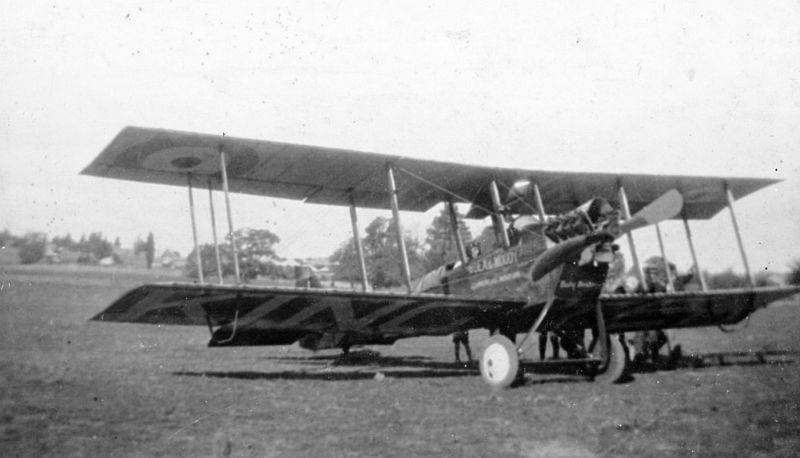
| CFS2? | Airco D.H.6 | B2803 | 642? | Built by the
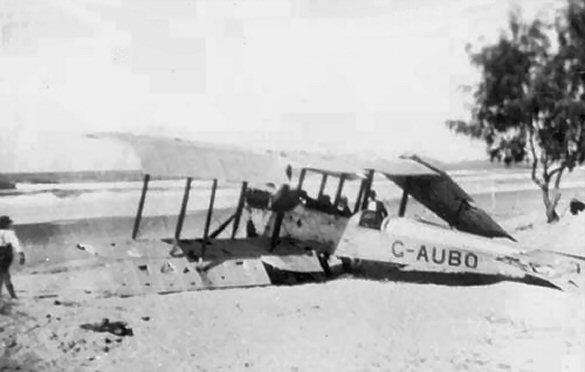
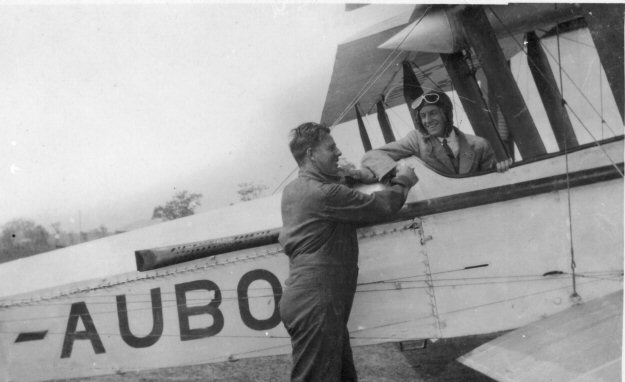
Aircraft Manufacturing Company, with a 90 hp RAF engine, Delivered Point Cook, 1918, 31/03/1919 Departed Point Cook, 24/03/19 Sold, 08/04/1919 To Aerial Company Ltd Sydney, In use 1919, 28/06/1921 To G-AUBO, C of A issued to F.T. O’Dea of Bathurst NSW, ??/?1921 Owned by FT O'Dea and PA Moody from 1921, ??/03/1925 Sold to S.L. Tyler of North Sydney in March of 1925. ??/11/1926 Acquired by N.C. Marconi and A.G. Dignum t/a Eagle Aviation Services of Brisbane. 27/01/1927 Crashed at Maroochydore, QLD, while joy riding, ??/01/1928 Withdrawn from register January 1928 when C of A lapsed. |
| CFS2? | Airco D.H.6 | B2804 | 3204? | Built
by the Aircraft Manufacturing Company, with a 90
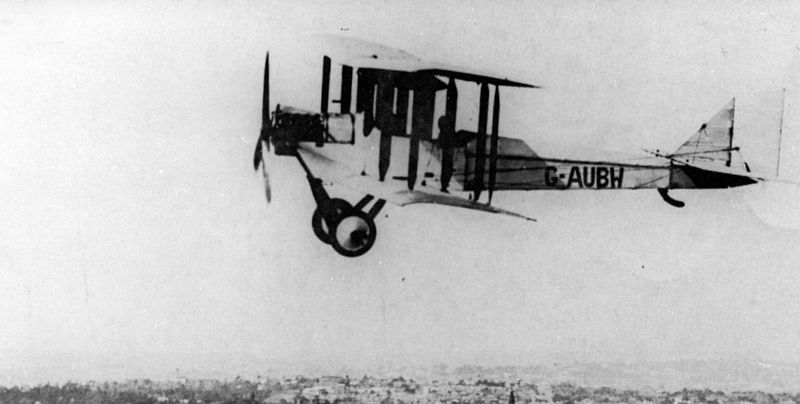
hp RAF engine. Delivered Point Cook, 1918, 26/08/1918 To 2nd Military District, NSW for First Peace Loan, 13/10/1919 To ARS CFS, Sold 1920, 28/06/1921 Probably to G-AUBH for William Robertson of Grafton NSW, 27/06/1922 Withdrawn from service June 1922, 31/12/1922 Crashed into a fence and was badly damaged (possibly while giving joy rides as it had been hired to T.H. Barkell of Sydney without a C of A and was "used for joy riding during the Christmas holiday") Note: G-AUBH has previously been quoted as ex-B3204. This RFC serial was never allocated to D.H.6s, but to Avro 504J aircraft. It would appear that this is clearly a clerical error for the ex-CFS machines B2804. |
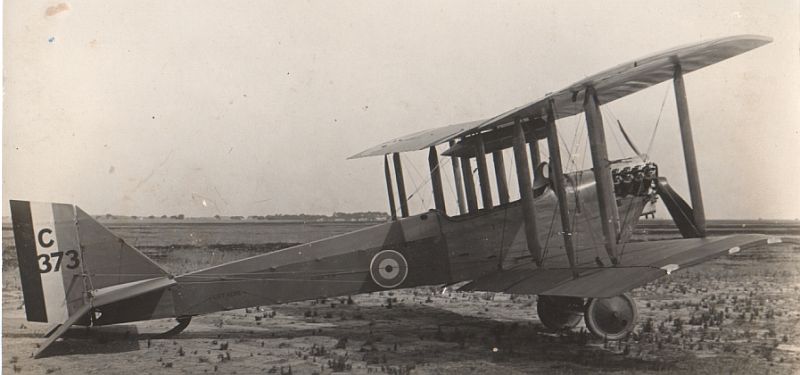
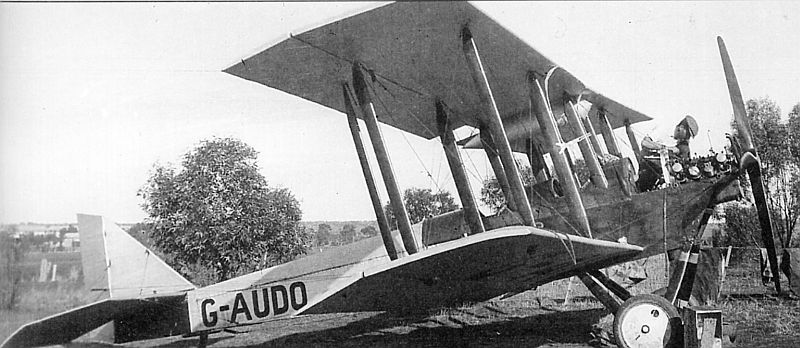
| CFS2? | Airco D.H.6 | C9372 | ? | Built
by Gloucestershire Aircraft, Cheltenham, UK, Delivered Point Cook, 1918, 11/07/1919 A Flight 1 HT Sqn to ARS, ??/12/1919 Sold to H C Miller, 28/12/1921 Sold to Pratt Bros and became G-AUDO, ??/09/1928 Withdrawn from service September 1928. |
| CFS2? | Airco D.H.6 | C9373 | ? | Built
by Gloucestershire Aircraft, Cheltenham, UK, Delivered Point Cook, 1918, 04/07/1919 C9373 and C9374 recommended for sale by the 20th Meeting of Air Service Committee, 11/07/1919 A Flight 1 HT Sqn to ARS, 22/07/1919 Sold to the Aeroflight Aviation Company (E J Jones, S G Brearley, R W McKenzie) for barnstorming from Hamilton Vic (“History of Australian Aviation”, Brogden, pg.63), ??/08/1919 To Aeroflights, ??/05/1920 Sold to Morris’ Aerial Services Melbourne . |
| CFS2? | Airco D.H.6 | C9374 | ? | Built
by Gloucestershire Aircraft, Cheltenham, UK, Delivered Point Cook, 1918, 04/07/1919 C9373 and C9374 recommended for sale by the 20th Meeting of Air Service Committee, 11/07/1919 A Flight 1 HT Sqn to ARS, ??/08/1919 To Aeroflights, ??/05/1920 Sold to Lt W H Treloar for joyriding, 06/08/1920 Aircraft flown by Lt CV Ryne from Richmond to Bathurst, 28/06/1921 C of A issued as G-AUBW, Sold to H T Shaw & R Ross of Fishermen’s Bend Vic as G-AUBW, Flying in 1928 with Ross Shaw Engineering and Aviation Co Ltd., As VH-UBW to Shaw Aviation Co Essendon, 07/08/1931 Burned in hangar fire, Melbourne, along with 3 other aircraft. |
| CFS2? | Airco D.H.6 | C9375 | ? | Built
by Gloucestershire Aircraft, Cheltenham, UK, 15/07/1918 Not Delivered. Lost at sea when SS Barunga was torpedoed in English waters 150 miles south west of the Scilly Isles on its journey to Australia. 02/08/1918 Struck off Charge. |
| ? | Airco D.H.6 | ? | ? | Built at Point Cook from Spares. Sold 1919. |
Other Civil DH6 Aircraft operated in Australia |
||||






| RFC/RAF No | C/N | Civil.Reg. | Aircraft History |
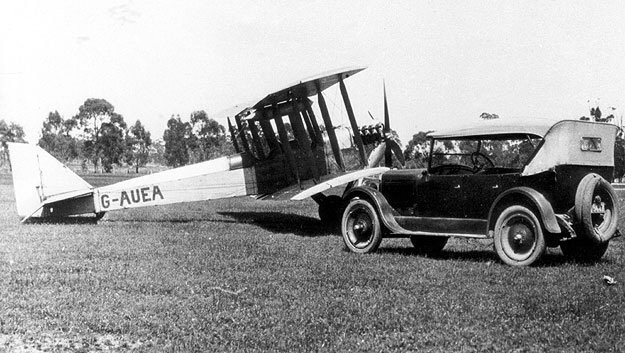
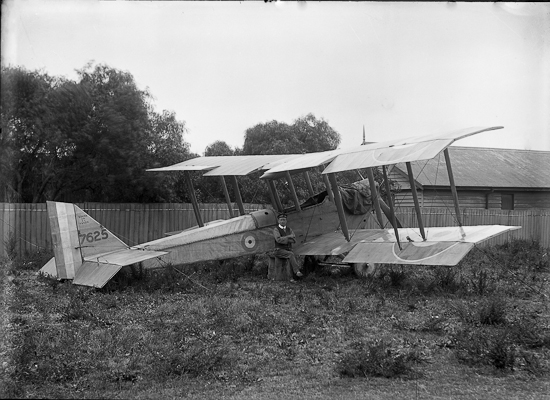
| C7625 | ? | G-AUEA | Built by Grahame White
(imported directly for civilian use?) but recorded
also as erected from spares by CD Pratt. C of A issued 28 December 1921 (No previous identity recorded). 05/04/1923 Registered G-AUEA to Geelong Air Service and used for joyrides by the Pratt brothers. Powered by 90hp RAF 1A engine. 03/04/1929 Sold to K R Brown, Bendigo, 11/06/1930 sold to T B Sissons, Bendigo. Reg changed to VH-UEA by 31 Aug 30?? 25/10/1930 Crashed at Mooroopna, Victoria, 25 October 1930. 02/12/1930 Struck off register |
| C1972 | ? | G-AUDO | Built by Grahame White
(imported directly for civilian use?). C of A issued to CD Pratt, Geelong, Victoria. The c/n listed on the registration page in the aircraft register at Henty House was its prior military serial of C1972. January 1928 G-AUDO left Geelong and sold to K.R.M. Farmer. March 1928 S to D.H. Jenkins, Struck off register 29 September 1928. |
| ? | 3204 | G-AUBH | Imported June 1921, used by
Shaw-Ross Aviation, Has been identified as B3204, but this was an Avro 504A and is probably a confusion with it's c/n. C of A issued 28 June 1921 to W Robinson, Grafton, NSW. Struck off register 27 June 1922. |
| ? | 3858 | G-AUDS | C of A issued to J Linn, Orange,
NSW, 27 July 1922. Sometimes quoted as B3858 but this was a Sopwith Camel serial, Crashed at Orange 29 April 1925 (imported direct for civilian use ?). |
| ? | 3202 | G-AUDW | C of A issued 29 March 1923
to Air Transport Ltd, Perth WA. Crashed 19 November 1923. (imported direct for civil use ?). |
| ? | ? | ? | Aircraft flown by Captain RW McKenzie MC to Hamilton, Victoria, for joyriding (ex Point Cook ?), |
| ? | ? | ? | Along with another (ex Point Cook ?) flown by Captain SG Brearley DFC (later Sir Norman Brearley, see his book 'Australian Aviator' for account). |
|
|||

Sources: "Military Aircraft of Australia 1909-1918" by Keith Isaacs pp.160-161, article was written by Harry Woodman in 'Model Aircraft Monthly, Vol 1 issue 7 July 2002, "Flypast" Parnell & Broughton, "History of Australian Aviation" by Stanley Brogden, An interesting point : a history of military aviation at Point Cook 1914-2014 by Steve Campbell-Wright., The Argus 19/07/1918, http://1000aircraftphotos.com/Contributions/CoffmanBill/9859.htm , “The Imperial Gift”, John Bennett, 1996,
Emails: Ron Cuskelly, Carl Tacey, Johan van der Wei, Bob Livingston, Chris Thornburg, Tom Lockley, Robert Brosing, Joe Barr, John Bennet, Scott Brown, SQNLDR Steve Campbell-Wright. Chris Tulk,
Page Authors: Darren Crick, Brendan Cowan & Martin Edwards
Updated 16 November 2021
It is
our policy to only show historical events, no current
operational information will be displayed on this
website.
"The ADF-Serials team give permission to use the content of this page,
excluding images, providing that it contains an acknowledgement to the
adf-serials team and any other listed sources.
